
Big Pharma’s Global Cartel
How qmericans were duped into funding the world’s healthcare

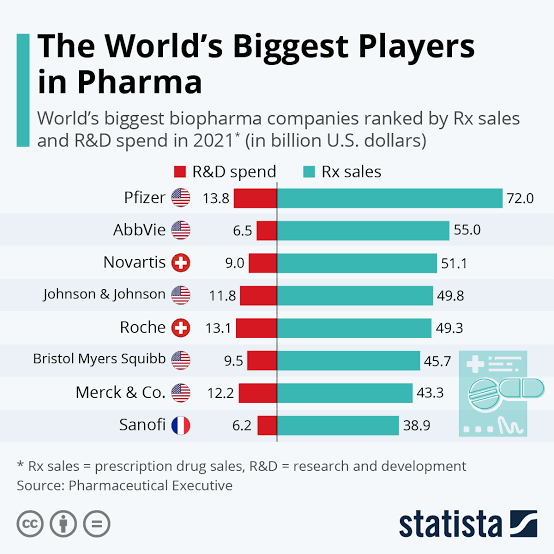
For decades, the United States has functioned as the open vault of the global pharmaceutical industry. With just 4% of the world’s population, Americans generate nearly two-thirds of Big Pharma’s global profits. The number seems surreal, but the explanation is simple: the U.S. is the only developed country whose government refuses to negotiate drug prices directly with pharmaceutical manufacturers. Unsurprisingly, the same medication that costs \$1,600 in Sweden can go for \$16,000 in New York. An asthma inhaler sold for 40 pounds in the U.K. is priced at \$500 in the U.S. And the trendy celebrity “fat shot” sells for \$88 in London—but \$1,300 in Manhattan. Same drug, same factory, same box.
The official excuse—repeated like a mantra by politicians and executives—is that high prices fund “innovation.” But the reality is far less poetic and far more profitable. While European countries impose price ceilings and demand tough negotiations, the American system lets labs charge whatever they want—shielded by a political and regulatory apparatus dominated by one of the most powerful lobbies in Washington. According to Robert F. Kennedy Jr., there are more pharmaceutical lobbyists in D.C. than there are members of Congress. Literally: each senator and representative has, on average, a dedicated Big Pharma lobbyist whispering in their ear. And the result of this institutional promiscuity is that no serious price-control reform has moved forward in over two decades—despite endless promises from Democrats during election cycles.
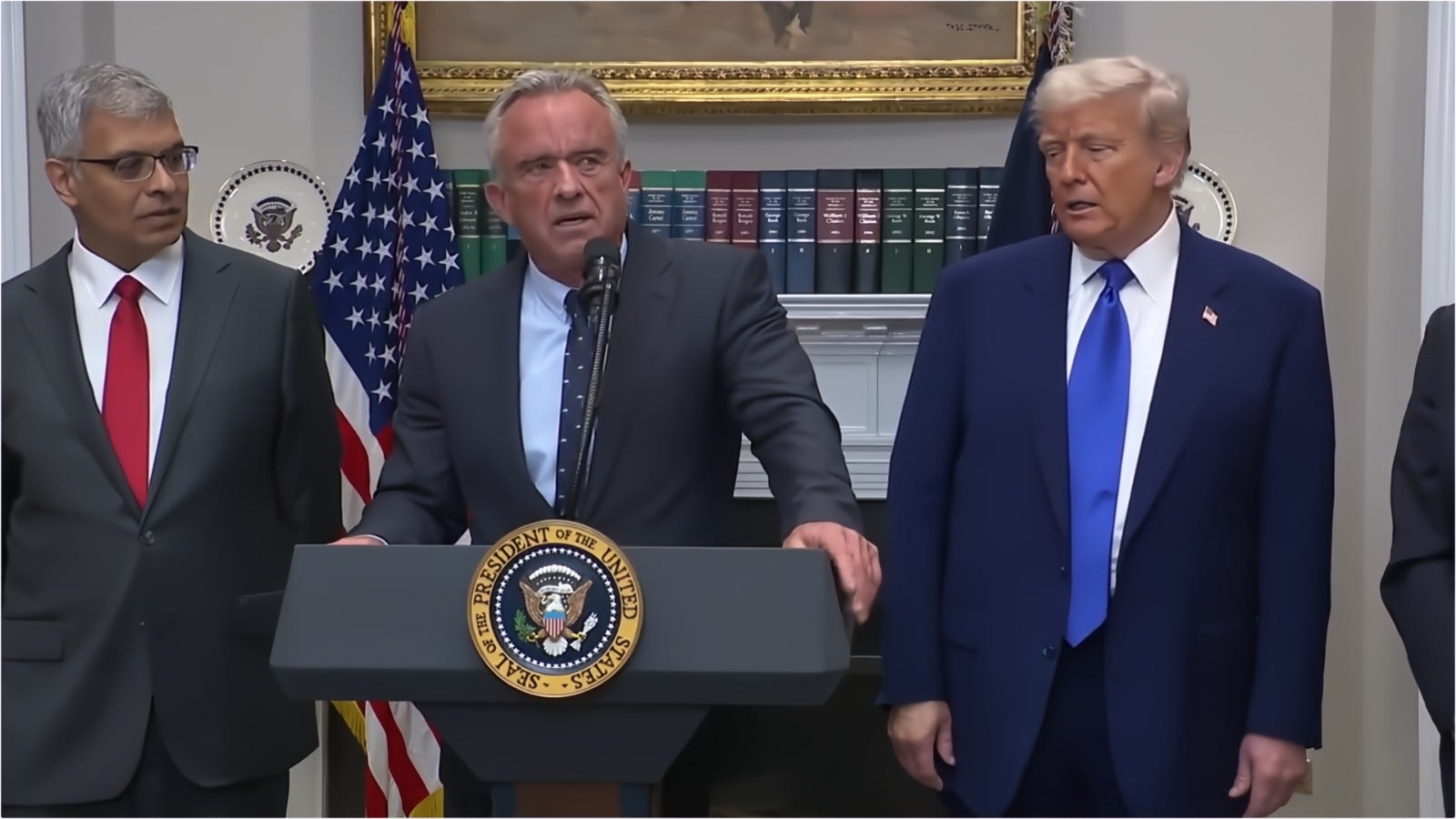
It was Donald Trump who broke that cartel pact. He signed an executive order dubbed the “Most Favored Nation Pricing Rule,” which forces the U.S. to only pay the lowest price that any other developed country pays for a given drug. The measure is devastating to the current pricing model. According to former FDA commissioner Dr. Marty Makary, the expected drop in U.S. drug prices could range from 59% to 90%, depending on the drug. Unsurprisingly, the industry pushed back hard. The pressure against Trump was immense. Several provisions were challenged in court or sabotaged by bureaucrats aligned with the pharmaceutical lobby. But the idea stuck. RFK Jr., another outspoken critic of the industry, has vowed to fight the pharmaceutical state and expose its grip over regulatory agencies and lawmakers.
Yet the gravest part of this scandal is not the price itself—but the conspiracy of silence that sustains it. Big Pharma has become the largest advertiser in U.S. media. Data shows that major newspapers and television networks are directly dependent on drug company ad money. That’s why topics like vaccine injuries, mass experimentation, or clinical trial fraud are either ignored or aggressively censored. Anyone who breaks the consensus is immediately branded a conspiracist. That’s not public health—that’s cartel behavior. And like any cartel, it survives on censorship, blackmail, and political protection.
The international dimension is even more outrageous. Drug companies accept selling at rock-bottom prices to Europeans, Australians, and Canadians because they know they can dump the burden on the U.S. market. In short, American citizens—betrayed by their own political class—are footing the bill for Paris, Berlin, Stockholm, and Ottawa. The same vial of insulin that costs \$10 in Denmark sells for \$300 in the U.S. Not because Americans are richer—but because their government is more corrupt, and their institutions more sold out.
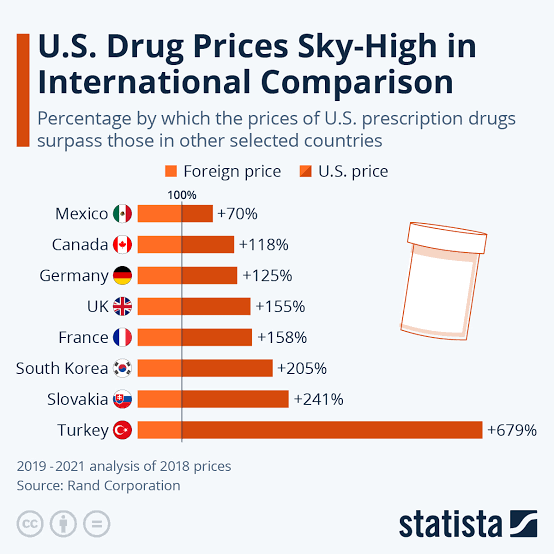
Breaking this model could trigger a global shift in pharmaceutical geopolitics. If the U.S. enforces reciprocal pricing, as Trump proposes, the cartel will have to rethink its global pricing architecture. Drug companies will still profit—but the cost will be distributed more fairly. Europe, which currently benefits from parasitic price arbitrage, will have to start paying its share. And American media will finally have to explain why they spent decades hiding the fact that their readers were subsidizing the world's healthcare—not out of generosity, but due to institutional cowardice.
As the late philosopher Olavo de Carvalho once said, “The ruling class has no ideology—only appetite. When it finds a docile people, it bites. When it meets resistance, it barks.” America is starting to resist. And the hysterical barking of the pharmaceutical cartel may be the first sign that the bite won’t be tolerated much longer.