
DOING PUTIN'S JOB FOR HIM
Trump, the DOJ, Hegset and the Erosion of the American Republic

America remains, to this day, nearly untouchable by foreign tyrants for a reason its enemies often understand better than many of its own politicians. It is not merely because of aircraft carriers, nuclear submarines, the dollar, Wall Street, Silicon Valley, or the global network of military bases. All of that matters. But all of it rests upon something prior, rarer, and far harder to rebuild once destroyed: the institutional solidity of the American Republic.
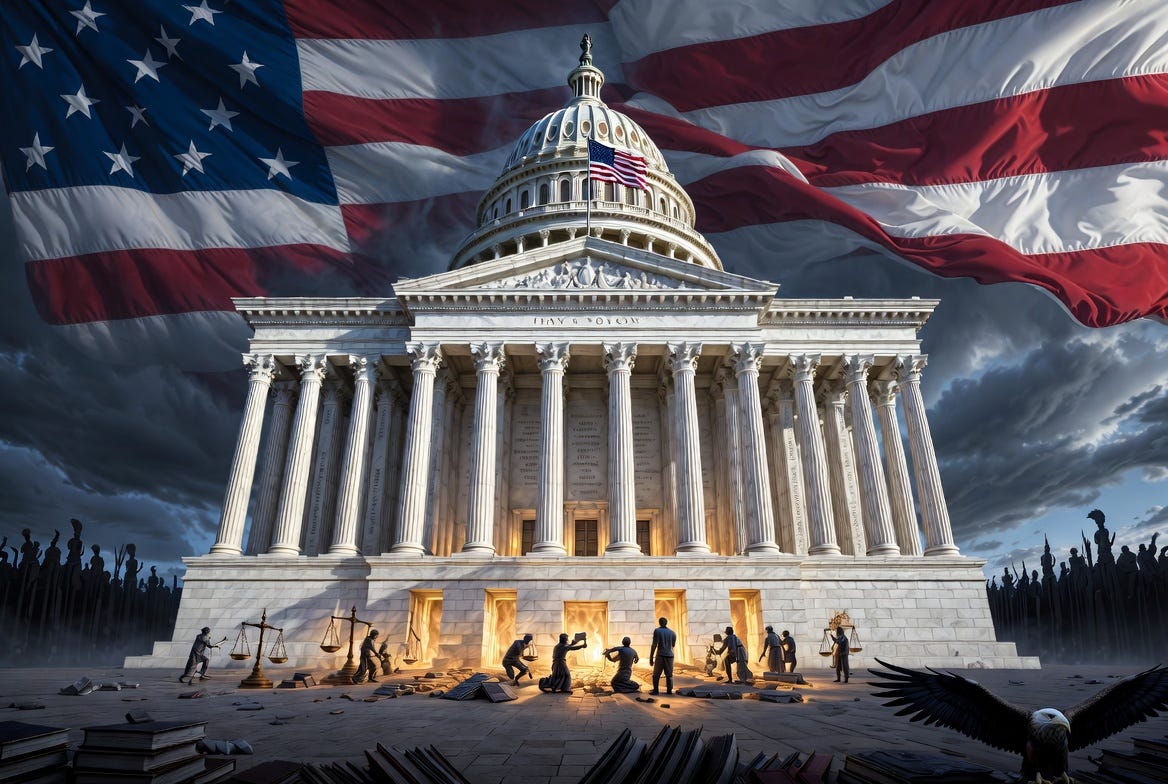
A foreign tyrant may hate the Constitution of the United States. He may mock its courts, its checks and balances, its federalism, its press, its noisy Congress, its legal tradition, its almost religious obsession with procedure. Yet he knows that this is where America’s real wall stands. What makes America dangerous to dictatorships is not only its ability to project force. It is the existence of a state that, at least in its original vocation, prevents force from belonging entirely to one man.
That is why the symbolic degradation of the federal government cannot be treated as internet theater. When a federal administration, seated atop the DOJ, intelligence agencies, prosecutors, courts, police powers, and the trillions of the Department of War, begins turning institutions into emotional extensions of personal leadership, it reaches the foundation of the republic. The problem ceases to be bad taste. It becomes political architecture.

The Department of Justice is not a campaign account. The Department of War is not a meme studio. American diplomacy is not one man’s public relations agency. A passport is not campaign literature. A uniform is not cult wardrobe. A public building is not a billboard of devotion. Every time one of these boundaries is violated in the name of loyalty, aesthetics, virality, or culture war, the republic loses a little of the distance that separates constitutional government from patrimonial rule.
That distance is precisely what tyrants have never managed to build. In personalist regimes, everything ends in the leader. The law ends in the leader. The police end in the leader. War ends in the leader. Public truth ends in the leader. The entire bureaucracy learns to sniff the mood of the palace before performing its function. When America begins playing with this logic, its adversaries do not need to defeat it in open battle. They need only wait while America imports, out of vanity, the political poison it once denounced abroad.
American strength has always depended on an implicit promise: presidents pass, the Republic remains. Parties alternate, the state continues. Governments fail, the mechanisms of correction survive. Ambitios men rise to power, institutions contain them. When that promise is replaced by a liturgy of personal loyalty, the damage does not first appear in the budget, the GDP, or the military map. It appears first in symbols. Then in habit. Then in procedure. Finally, in obedience.
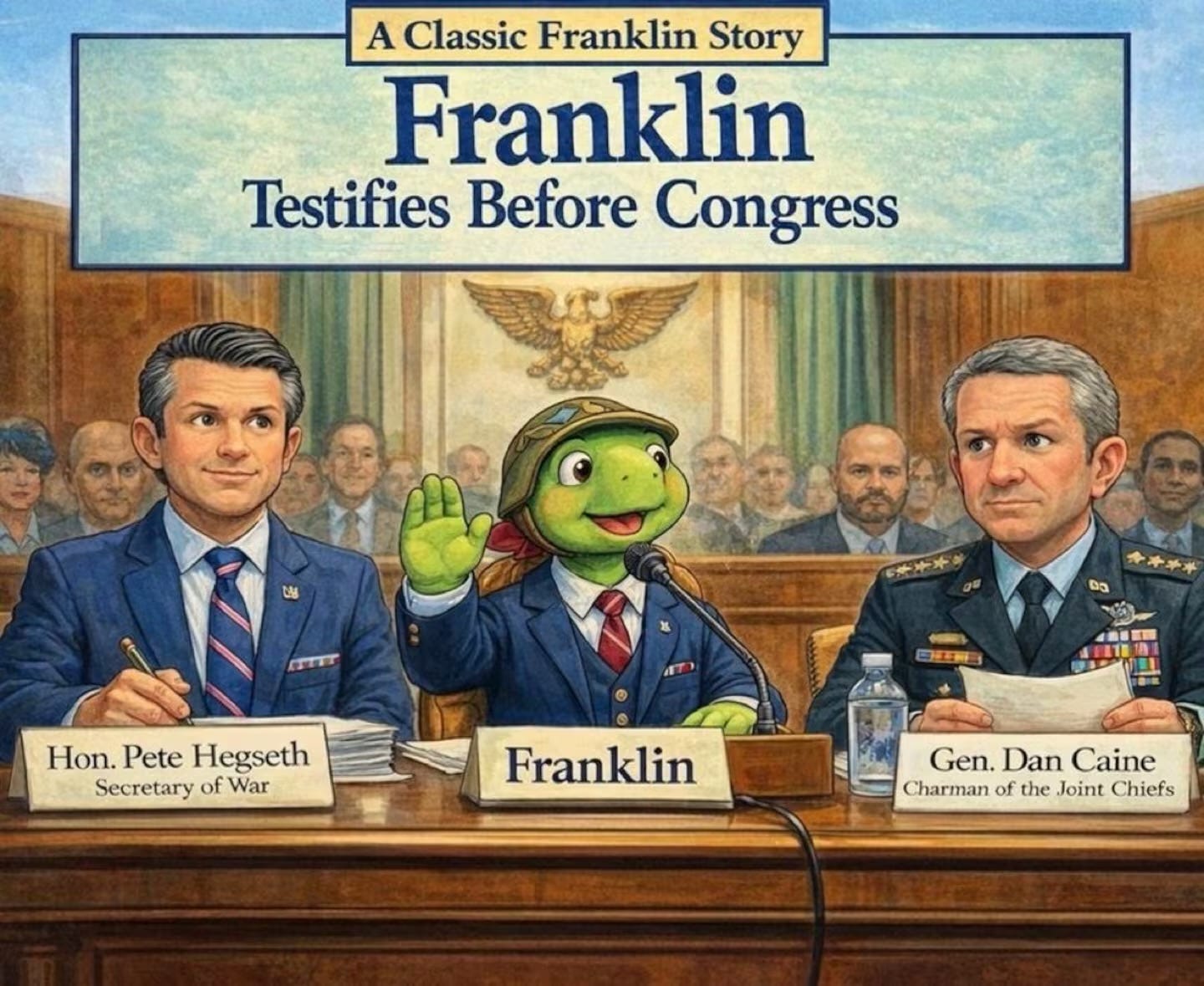
Republican decay rarely begins with a classical coup. It begins when serious men agree to play courtiers. It begins when institutions armed with trillion-dollar budgets start behaving like branding departments. It begins when the impersonality of the state, that civilizational achievement as tedious as it is indispensable, is sacrificed for base applause. The foreign enemy watches. The ally watches. The citizen watches. And everyone understands, each in his own way, that a power can remain enormous while its moral center begins to give way.
America is still protected from tyrants because its institutions still exist. That is precisely why undermining them from within is the most efficient way of doing the work that Putin, Xi, and the ayatollahs could never accomplish alone. An empire does not fall when its enemy insults it. It falls when its own administrators begin treating the republic as the aesthetic property of whoever won the last election.
The tyrannical tyrant trumpet must be stopped before he sinks our ship
Thank you. Precise and to the point.