
Great-Power Politics Returns: Davos Dying and the New Era
Davos 2026 felt like an autopsy of the post cold war globalist order.

Something ended in Davos, and the room tried to pretend it wasn't smelling bad.

For eighty years the West lived inside a comforting story: power had been domesticated. Institutions would enforce the “rules.” Allies could plan on guarantees that outlived elections, personalities, and moods.
In Davos 2026, that story didn’t get debated. It got buried.
Thucydides wrote the sentence that never stops being true: the strong do what they can, the weak suffer what they must. The postwar “rules-based order” was the West’s attempt to suspend that law by wrapping power in procedure and moral language.
It worked as long as the guarantor acted like a guarantor.
This year, Canada’s prime minister, Mark Carney, said the quiet part out loud: great powers are walking away from the rules. He wasn’t talking only about Beijing or Moscow. He was pointing at Washington.
Translate that into reality, without conference euphemisms.
When the United States becomes transactional and volatile, middle powers discover a harsh truth: they were never protected by institutions. They were protected by a superpower that wanted the system to hold.
Remove that, and “multilateralism” becomes a set of microphones with nobody enforcing the terms.
So what happens to countries that aren’t giants?
They get squeezed.
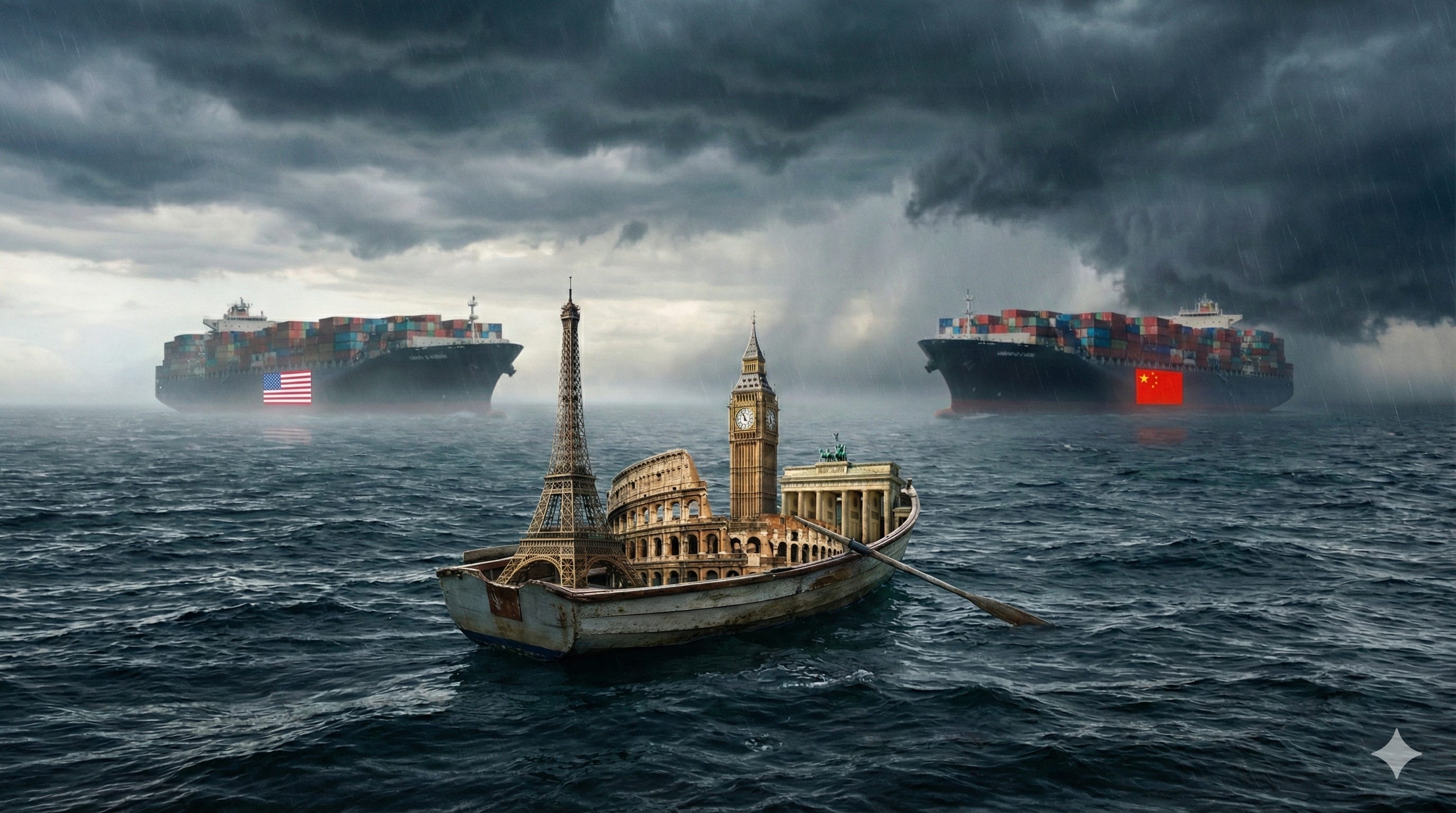
The clean solution is to coordinate middle powers, pool leverage, and negotiate as a bloc. But paper solutions die quickly in Europe’s real political weather. Post-Brexit Europe is not one strategic mind. It’s a cluster of national reflexes. The moment pressure rises, the continent stops speaking in “Europe” and starts speaking in capitals.
And capitals bargaining alone are easy prey.
Then Trump stepped into Davos and demonstrated the new operating system in real time.
In a few days, the rhetoric around Greenland swung from coercive certainty to a vague “framework” for a future arrangement. People asked: what’s the plan, what’s the deal, what’s the endpoint?
That question assumes the point is clarity.
In the new age, the point is imbalance.
Unpredictability isn’t a flaw. It’s leverage. Keep allies nervous. Keep adversaries guessing. Keep negotiations permanently open. Make everyone spend energy interpreting signals instead of building counter-strategy. You don’t need a perfect plan when the environment itself becomes your weapon.
And while the West tries to interpret, vacuums appear.
Vacuums never stay empty.
Xi Jinping didn’t even need to attend Davos. China was still the gravitational center of the week, because everyone is quietly adjusting to a world where America’s guarantees are no longer assumed as durable.
Here’s the bitter irony.
For decades, Western elites sold “rules, institutions, multilateralism” as the antidote to China’s raw power. Now those same elites hedge and diversify toward Beijing because survival outranks sermons. When the guarantor becomes a negotiator, the protected start looking for other doors.
But China is not a fantasy savior. China is slowing.
Beijing is signaling a lower growth ceiling than the era when explosive numbers were treated as political necessity. Real estate overhang, demographic decline, weak internal demand: constraints are tightening.
The naive conclusion is: slower China means safer China.
History suggests the opposite can be just as likely. A power facing tighter constraints doesn’t always become cautious. Often it becomes sharper, because external victories compensate for internal anxiety. Decline in momentum can produce aggression, not restraint.
Davos 2026 wasn’t an economics forum. It was an autopsy.
The globalist order wasn’t just treaties. It was a belief system: a shared faith that the strongest player would keep the structure intact because it benefited from stability more than it benefited from extortion.
When that faith cracks, the paperwork becomes theater.
And that’s where Olavo de Carvalho enters with uncomfortable precision (a Brazilian philosopher and influential conservative polemicist who argued that politics follows culture and language — that the real battlefield is upstream, in what a society is allowed to consider normal, true, and legitimate).
Olavo’s framework explain why Davos felt surreal. Not because people lacked information, but because they lacked the categories to name what was happening.
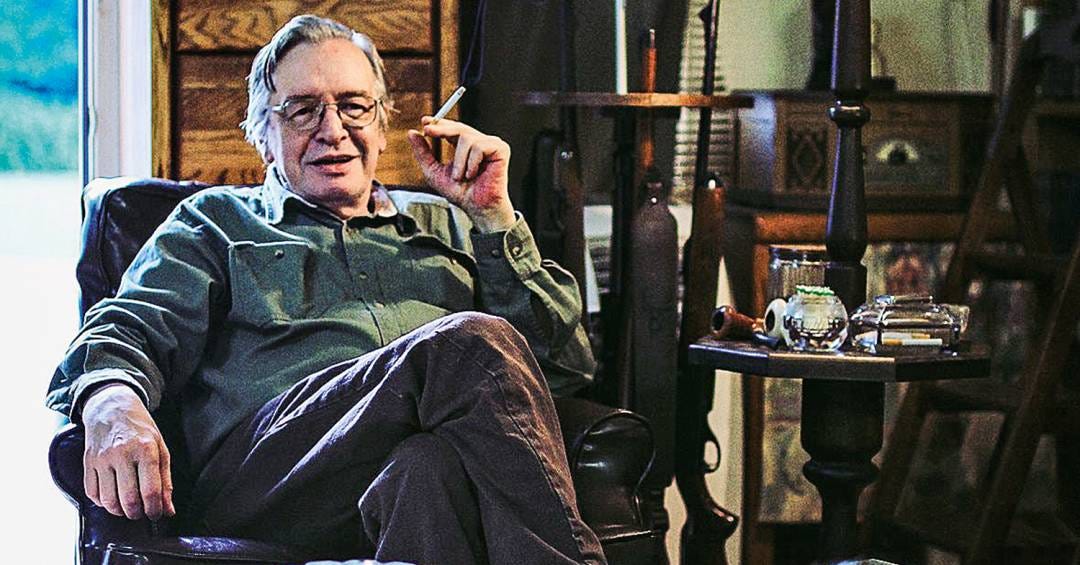
He argued that modern elites often maintain control by manufacturing a substitute reality: not always blatant lies, but a parallel world where prestigious words remain prestigious even after facts stop obeying them. “Rules-based order” is one of those prestige phrases. It sounds like law. It sounds like morality. It sounds like civilization.
But it only functions when power agrees to be restrained.
Once that agreement dissolves, the phrase becomes liturgy. You can chant it in a Swiss resort while the world quietly returns to Thucydides.
This is the shift Americans should pay attention to.
Not because America is “losing.” America can thrive in a competitive, power-first world. But it will be a different kind of thriving: more contested, more expensive, more openly coercive. Allies will be treated less like family and more like invoices. Commitments will feel like temporary contracts.
And for everyone who is not a superpower, the message is brutal: negotiating alone is losing.
The romantic dream of a stable third way assumes a rules-based environment where neutrality is protected by norms. But norms don’t protect you when enforcement disappears. In a might-is-right era, smaller players either coordinate, attach themselves to a patron, or become bargaining chips.
Davos was the moment the elite world accidentally admitted this to itself.
A few people named the rupture. Many tried to soften it as “shifting conditions,” as if an earthquake can be managed by vocabulary.
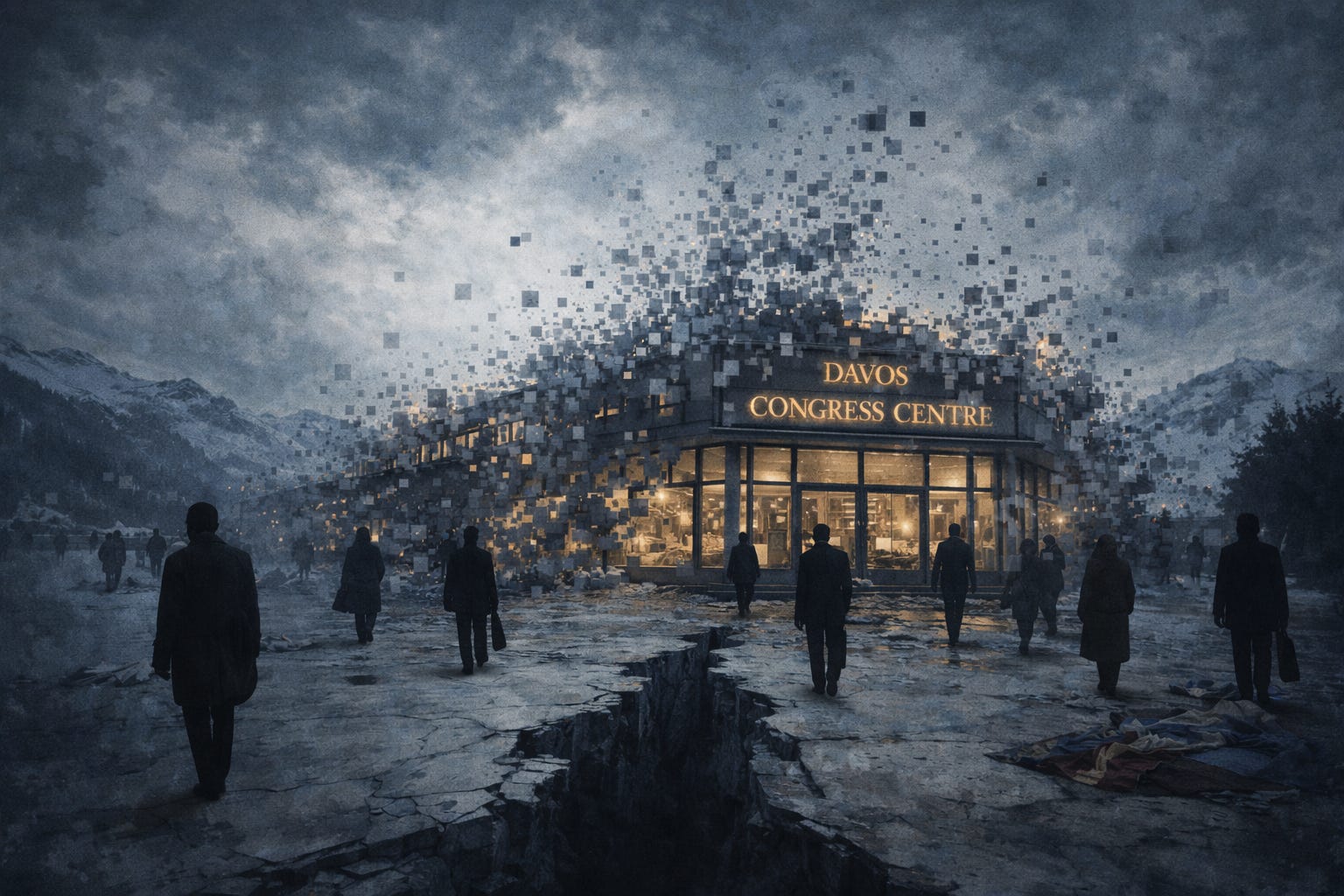
But Thucydides doesn’t care about managerial language.
The world is reverting to older physics: leverage, coercion, spheres of influence, deals under threat — nineteenth-century logic with twenty-first-century tools.
The only question is whether we’re watching the autopsy, or still applauding the keynote.
I appreciated the article. It is sharply written and raises an important question about whether global order is shifting toward more overt power bargaining.
A few things I noticed while reading:
The piece consistently frames events through a realist power-politics lens, while alternative interpretations such as institutional resilience or cooperative bargaining are not explored.
Several conclusions are presented as inevitabilities rather than as one plausible trajectory among others.
Smaller nations are portrayed as having minimal agency, though recent multilateral coordination suggests they still shape outcomes in meaningful ways.
Maybe we can also look at this moment a different way:
Instead of an autopsy of the rules-based order, this may be a renegotiation of how rules are enforced.
Power dynamics are more visible, but institutions still constrain behavior and create costs for pure coercion.
Uncertainty cuts both ways, weakening predictability but also opening space for adaptive cooperation.