
MODERNITY IS A ROLLER COASTER
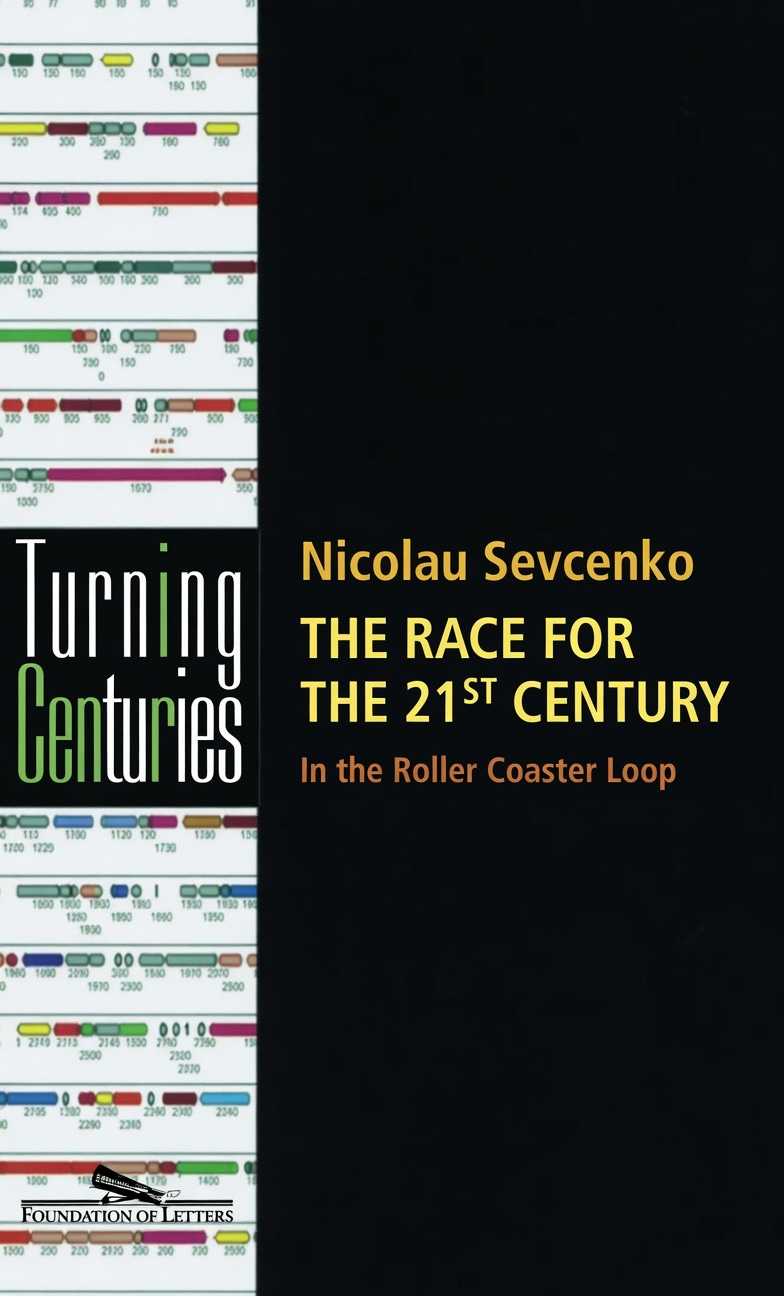
A late USP historian named Nicolau Sevcenko diagnosed our predicament before the algorithms arrived, and we are still riding inside the loop he described.

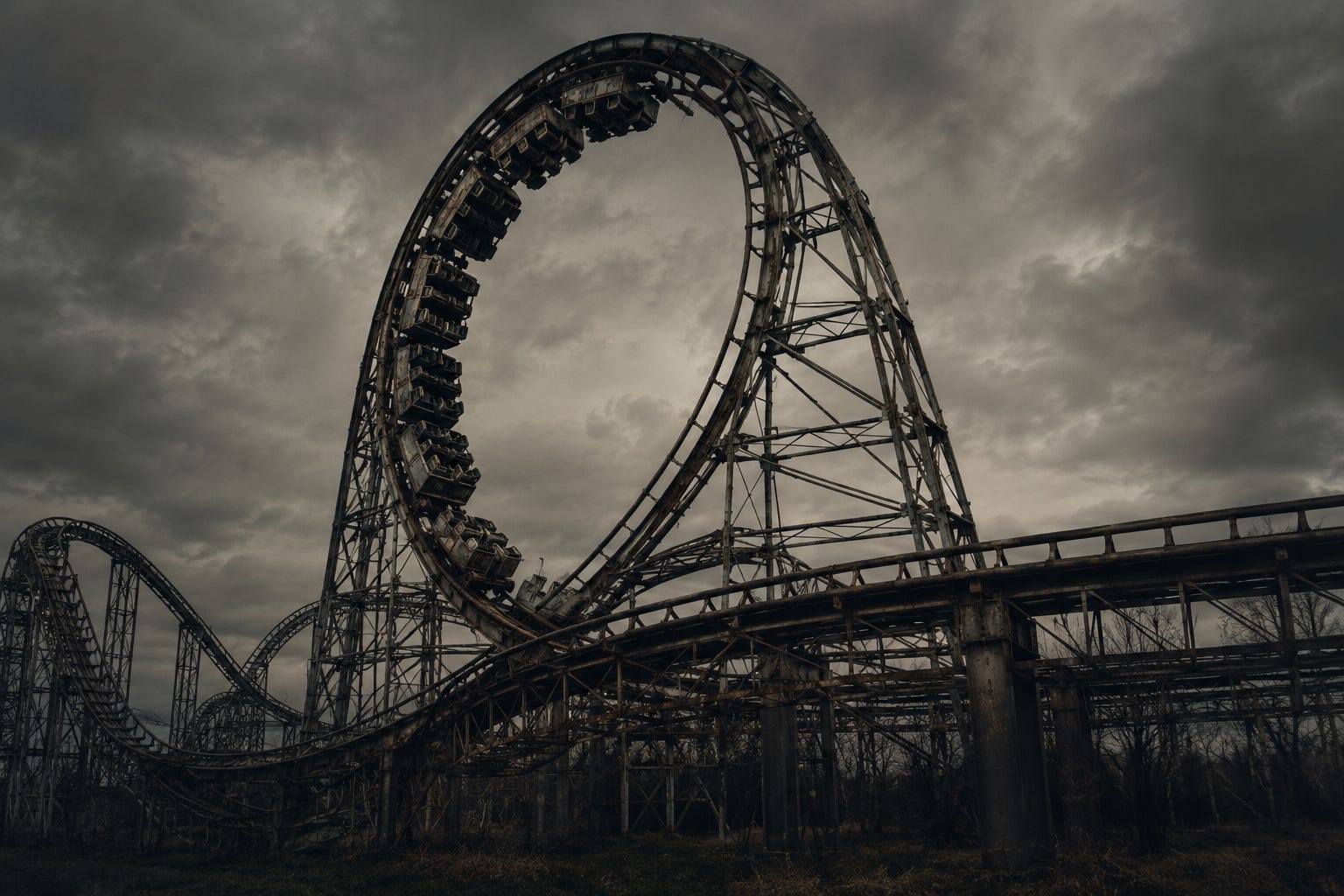
There is an image from Nicolau Sevcenko, the late professor of contemporary history at the University of São Paulo whose course I had the privilege of attending as a visiting student eight months before his death, that modernity, in its festive arrogance, has chosen to ignore. History, he wrote, ceased being a road and became a roller coaster beginning with the Industrial Revolution, and what looks like a mere analogy of speed reveals, broadly speaking, an entire civilizational condition.
In classical modernity there still existed the illusion of trajectory. Enlightenment man walked toward a perfection he believed inscribed in reason itself, for science would illuminate the darkness, technique would resolve material limitations, and politics would at last shake off the atavistic weight of religion. There was an axis, there was a sense, there was a horizon that one could, at least in theory, contemplate with the tranquility of the pilgrim.
Sevcenko grasped that this horizon had been replaced by a closed track. And on a closed track there is a detail the passenger only discovers too late, namely, the loop. In that instant of total acceleration, gravity seems to disappear, the body loses its reference between up and down, and contemporary man no longer distinguishes purpose from instrument, liberty from impulse, progress from dissolution. Everything spins too fast for contemplation to remain.
The irony, my friend, is fine. The Enlightenment project was born promising rational sovereignty to the individual and produced, after three centuries, a creature that merely reacts. Technique advances faster than culture can digest, information circulates faster than consciousness can absorb, and algorithms, biotechnology, and artificial intelligence multiply effects that no one really understands anymore, even though everyone finds himself obliged to consume them. Modern man drives nothing, merely endures the route, and still gives thanks for the adrenaline.
Hence the curious coexistence of superficial euphoria and spiritual exhaustion. Such is civilizational passengerism, for while the machine accelerates, consciousness remains motionless, and man, fascinated by his own velocity, forgets that the track was never designed to stop.
Modernity promised us the throne of God and handed us a seat on the amusement park ride. At least the view is good until the next loop.
really BEAUTIFUL and the analogy between life and the roller coaster .. ;) thank you
you expressed it well.
Very good.